Social Media Ad Targeting Guide: How to Reach the Right Audience and Maximize ROAS in 2026
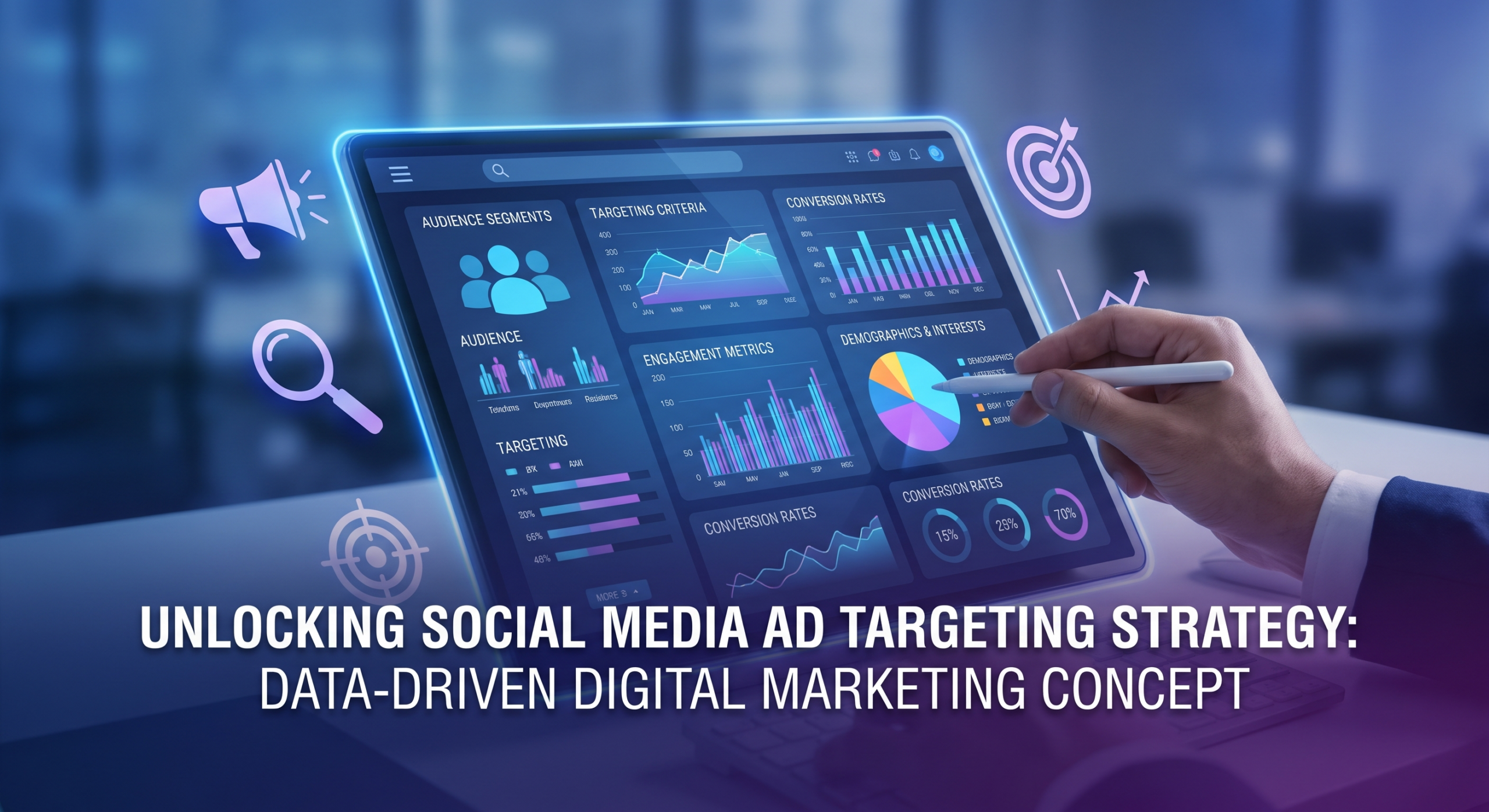
Running social media ads without precise targeting is like broadcasting on a frequency nobody’s listening to. In 2026, the technical capabilities for audience targeting across Facebook, Instagram, TikTok, LinkedIn, and Pinterest have never been more sophisticated — yet many advertisers still waste significant budget reaching people who will never buy. This guide covers the complete targeting strategy framework that top digital marketers use to drive exceptional return on ad spend.
The Targeting Foundation: Knowing Your Customer
Targeting capabilities are only as good as your understanding of who you’re trying to reach. Before setting a single targeting parameter, invest time in defining your ideal customer with precision. This isn’t a one-time exercise — as you gather campaign data, your customer understanding should continuously evolve.
Building Data-Backed Customer Personas
The best customer personas are built from actual data, not assumptions. Start with your existing customers: analyze purchase data, survey buyers about their demographics and motivations, review customer support tickets for common problems, and study which organic content resonates most. Layer this with platform audience insights tools — Facebook Audience Insights, Google Analytics demographics reports, and LinkedIn Campaign Manager audience data all provide invaluable signals.
Jobs-to-Be-Done Framework
Rather than demographic targeting alone, structure your customer understanding around what “jobs” they hire your product to do. This reframes targeting from “35-44 year old women” (demographic) to “people trying to save time managing their household” (motivational). This job-oriented framework leads to much more precise creative and targeting decisions.
Core Targeting Types Explained
Every major social advertising platform offers several layers of targeting that can be combined for precision:
Interest and Behavior Targeting
Platforms infer interests from user behavior — pages liked, content engaged with, purchases made, apps used. Interest targeting is powerful for top-of-funnel campaigns reaching new audiences, but broad interest categories (“Marketing,” “Technology”) are often too wide. Layer multiple interests, exclude irrelevant segments, and use detailed behavior targeting (frequent travelers, small business owners, recent movers) to tighten relevance.
Custom Audiences (First-Party Data)
Your first-party data — email lists, website visitors, app users, video viewers — powers the most effective targeting. Upload your email list to Facebook or LinkedIn to reach known customers and warm prospects directly. Customer list custom audiences typically have 3–5x higher conversion rates than cold audiences because they’ve already signaled interest in your brand.
Lookalike and Similar Audiences
Lookalike audiences (Facebook) and similar audiences (Google/YouTube) use machine learning to find users who share characteristics with your best customers. Start with your highest-value customer segment as the source — your top 10% of customers by LTV, not all customers. Use 1–2% lookalike sizes for highest similarity; expand to 3–5% when you need more volume at slightly lower precision.
Retargeting (Remarketing)
Retargeting reaches users who’ve already interacted with your brand — visited your website, watched your videos, engaged with your social profiles, or abandoned a cart. These audiences convert at significantly higher rates and often at lower costs than cold audiences because intent is already established. Segment retargeting audiences by engagement depth: product page visitors vs. checkout abandoners require different creative and offers.
| Targeting Type | Audience Temperature | Typical ROAS | Best Use Case | Budget Allocation |
|---|---|---|---|---|
| Retargeting | Hot | Highest | Conversion campaigns | 20–30% |
| Custom Audiences | Warm | High | Upsell, loyalty | 15–25% |
| Lookalike (1–2%) | Warm-cold | Medium-High | Prospecting | 30–40% |
| Interest Targeting | Cold | Medium | Awareness, prospecting | 20–30% |
| Broad/No Targeting | Cold | Variable | Algorithm optimization | 10–20% |
Platform-Specific Targeting Strategies
Meta (Facebook/Instagram) Advanced Targeting
Meta’s Advantage+ audience features use AI to optimize targeting automatically, often outperforming manual targeting for mature accounts with sufficient conversion data. However, for new accounts or niche products, manual targeting with Detailed Targeting (interests + behaviors) combined with Custom Audience exclusions provides more control. The Meta Pixel remains essential — install it immediately and accumulate conversion data before running conversion objective campaigns.
TikTok Targeting in 2026
TikTok’s targeting has matured significantly. Interest categories, behavior targeting (video interactions, hashtag interactions), and creator lookalike audiences are all available. TikTok’s algorithm is particularly powerful at distributing content to interested users organically — meaning creative quality matters more than targeting precision. Start broad on TikTok and let the algorithm optimize. Spark Ads (boosting organic content) often outperform dark posts because they carry social proof.
LinkedIn B2B Targeting
LinkedIn offers unparalleled B2B targeting: job title, seniority level, company size, industry, skills, and more. LinkedIn CPCs are significantly higher than other platforms, so targeting precision is critical. Use matched audiences (uploading company lists or contact lists) combined with job title/seniority targeting for the most qualified B2B reach. LinkedIn’s thought leader ads (amplifying employee personal posts) are a cost-effective alternative to traditional sponsored content.
Advanced Targeting Strategies
Sequential Retargeting
Rather than showing the same ad repeatedly to retargeted audiences (ad fatigue), build sequential creative flows: awareness ad → consideration ad → conversion ad → post-purchase ad. Each stage targets audiences defined by their behavior (video watchers, website visitors, purchasers) and serves creative matched to where they are in the decision journey.
Exclusion Targeting
Exclusions are as important as inclusions. Exclude recent purchasers from conversion campaigns to avoid wasted spend. Exclude current customers from acquisition campaigns to focus budget on growth. Exclude competitor brand terms from interest targeting if you’re not specifically targeting competitor audiences. Excluding low-intent behaviors from your targeting pools improves efficiency significantly.
Measuring and Optimizing Targeting Performance
Audience Overlap Analysis
When running multiple ad sets targeting different audiences, significant overlap between audiences creates internal bidding competition that drives up costs. Use Facebook’s Audience Overlap tool or monitor cost patterns to identify overlap, then either consolidate overlapping audiences or increase budgets proportionally.
Frequency Management
High frequency (the average number of times a person sees your ad) signals targeting exhaustion. When frequency exceeds 3–4 for cold audiences and costs rise, it’s time to refresh creative or expand the audience pool. Monitor frequency weekly and set automation rules to flag campaigns exceeding your frequency threshold.
Frequently Asked Questions
What is a good ROAS for social media ads?
ROAS targets vary significantly by business model. E-commerce businesses with low margins typically need 4x+ ROAS to be profitable. High-margin SaaS or service businesses may be profitable at 2–3x ROAS. Calculate your break-even ROAS based on your margin structure, then set target ROAS accordingly.
Should I use broad targeting or detailed targeting in 2026?
It depends on your account maturity and budget. Accounts with sufficient conversion data (50+ conversions per ad set per week) often perform better with broad targeting, letting the algorithm optimize. Newer accounts and smaller budgets benefit from more defined interest targeting to guide the algorithm efficiently.
How do iOS privacy changes affect targeting?
Apple’s ATT (App Tracking Transparency) framework significantly reduced cross-app tracking capability for Meta and other platforms. This reduced the size and accuracy of custom audiences built from website pixel data. Compensation strategies include: server-side conversion API (CAPI) implementation, first-party data collection and upload, modeled conversions, and diversification toward platforms less affected by iOS (Google, LinkedIn, TikTok).
What’s the difference between prospecting and retargeting campaigns?
Prospecting campaigns target new audiences who haven’t interacted with your brand — the goal is awareness and initial interest. Retargeting campaigns reach people who’ve already engaged — the goal is moving them toward purchase. Prospecting typically requires more budget and longer time horizons; retargeting is more efficient but audience sizes are smaller.
How often should I refresh my targeting strategy?
Review targeting performance weekly. Refresh creative every 4–6 weeks or when frequency exceeds 4. Test new audience segments monthly. Conduct a comprehensive targeting strategy review quarterly, incorporating learnings from all campaigns into updated personas and audience hypotheses.
Conclusion
Precise targeting is the multiplier that makes every other element of social advertising more effective. Start with first-party data — your email list, website visitors, existing customers — and build outward from there using lookalikes and interest targeting. Layer retargeting sequences to capture high-intent audiences at the bottom of the funnel. Continuously test, measure, and refine based on ROAS data, not just click-through rates. In 2026, the brands winning on paid social are those who combine deep customer understanding with systematic targeting optimization and genuine creative investment.