Paid Social vs Organic Social: How to Find the Right Balance for Your Brand
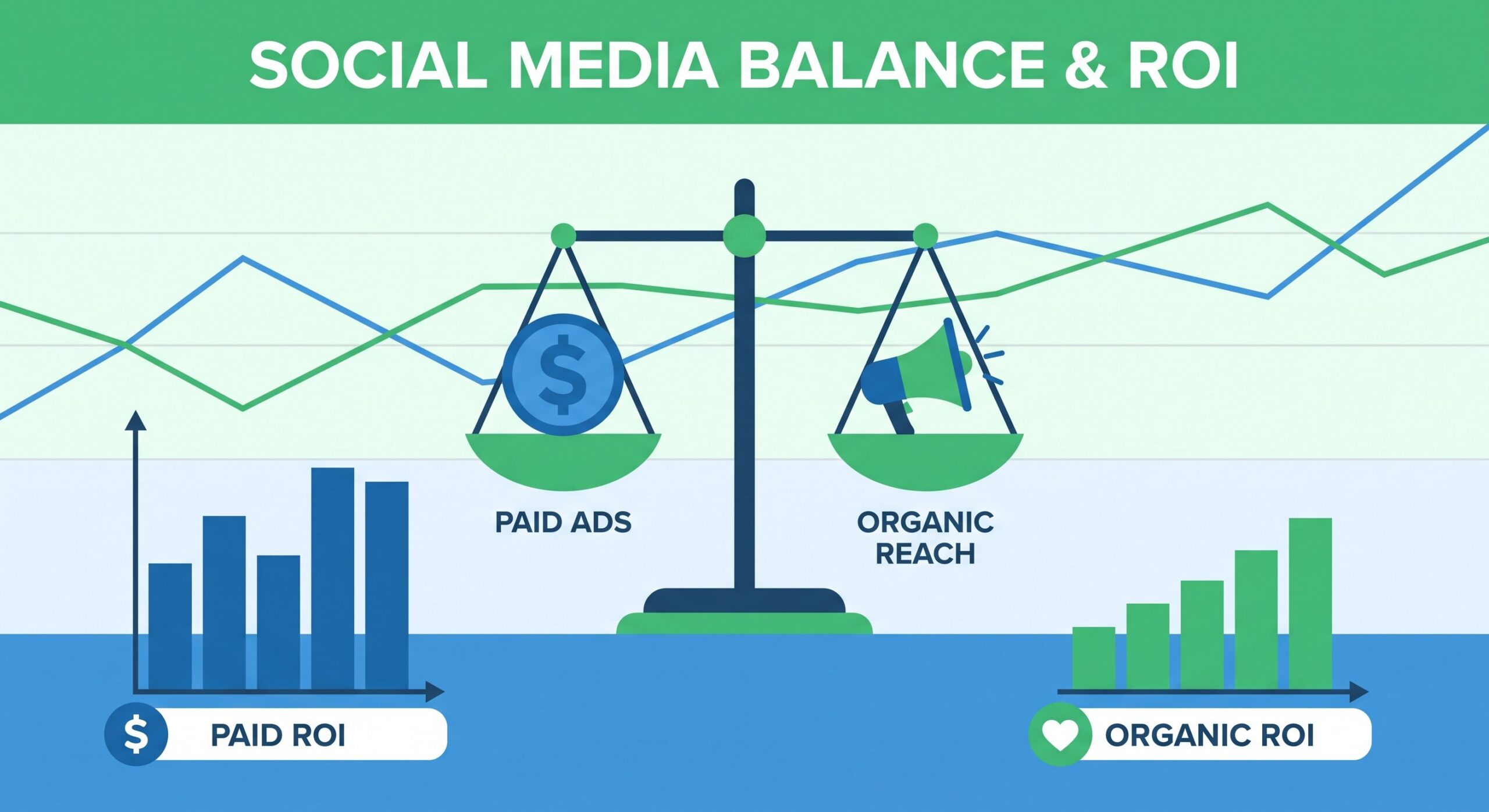
Every social media manager eventually faces the same strategic question: how much should we spend on paid ads versus investing in organic content? The answer isn’t a fixed percentage—it’s a dynamic decision that depends on your growth stage, business objectives, industry, and audience. Both paid and organic social have distinct strengths and fundamental limitations, and the brands that win at social media understand how to make them work together rather than treating them as alternatives.
The Core Difference Between Paid and Organic Social
Organic social media refers to content posted without paid promotion—standard posts, Stories, and videos that appear in your followers’ feeds and occasionally get discovered through platform algorithms. Paid social is sponsored content that reaches users beyond your followers, targeting audiences defined by demographics, interests, behaviors, and intent signals.
What Organic Social Does Well
- Builds authentic brand personality and community over time
- Nurtures existing followers into loyal brand advocates
- Demonstrates consistent presence and reliability
- Creates content that can be amplified by paid campaigns
- Generates social proof (comments, shares, reviews) that enhances paid ad performance
- Allows real-time engagement and community management
What Paid Social Does Well
- Reaches new audiences beyond your follower base immediately
- Drives measurable, attributable conversions
- Tests messages and creative at speed
- Targets users at specific stages of the funnel
- Scales successful campaigns quickly
- Maintains consistent reach independent of algorithm changes
The Organic Reach Crisis: What It Means for Your Strategy
Organic reach on most major platforms has declined significantly over the past decade. Facebook organic reach for brand pages sits at roughly 2-5% of followers in 2026. Instagram has similar dynamics. Only TikTok, Threads, and LinkedIn continue to offer relatively strong organic discovery—but even these platforms’ algorithms favor certain content types over others.
Why Organic Reach Has Declined
More content competes for a fixed amount of feed real estate. Platforms prioritize content from friends and family over brands. And frankly, reduced organic reach creates the conditions for advertising revenue—the platforms’ business model depends on brands paying for reach they used to get for free.
Organic Still Matters Despite Low Reach
Despite lower reach, organic social serves functions paid ads cannot: it builds brand identity, creates the social proof that makes paid ads convert better, and gives your existing community a place to engage. A brand that only runs paid ads without organic presence can feel soulless. Organic content gives your brand a human face.
When to Prioritize Paid Social
Paid social should be the dominant investment when speed of results, specific conversion goals, or audience expansion are priorities.
Launch Phases
When launching a new product, brand, or market expansion, paid social provides immediate audience access that organic cannot. Building an organic audience takes months; a targeted paid campaign can reach tens of thousands of ideal customers within days of launch.
Direct Response Campaigns
For campaigns with specific conversion goals (product purchases, lead generation, app installs), paid social with conversion-optimized campaigns and proper tracking delivers measurable ROI that organic content cannot match.
Seasonal Sales and Time-Sensitive Promotions
When you have a Black Friday sale, limited-time offer, or seasonal promotion, you need immediate reach—you can’t wait weeks for organic content to slowly distribute. Paid social ensures your time-sensitive message reaches your target audience during the relevant window.
When to Prioritize Organic Social
Organic content should be the dominant investment when community building, brand positioning, and content quality are priorities.
Brand Building and Thought Leadership
Consistent organic posting builds the brand’s voice, personality, and positioning over time. You cannot pay your way to genuine thought leadership—it requires consistent, valuable content that earns trust through repeated exposure.
Community Management
Your existing customers and followers deserve consistent organic engagement. Reply to comments, post community content, highlight user-generated content, and demonstrate that there’s a human team behind your brand. Paid ads bring people in; organic content keeps them.
Content That Serves as Paid Ad Fuel
Your best-performing organic posts are candidates for paid promotion. Instead of creating separate ad creative from scratch, test messages and formats organically first (at zero cost), then amplify what proves to resonate. This approach reduces creative risk and improves paid campaign performance.
Paid vs Organic Social: Investment Framework by Business Stage
| Business Stage | Paid Social % | Organic Social % | Primary Goal |
|---|---|---|---|
| Pre-launch / Launch | 70-80% | 20-30% | Audience acquisition, awareness |
| Growth (0-2 years) | 60-70% | 30-40% | Lead generation, conversions |
| Established (3+ years) | 40-60% | 40-60% | Retention, brand building |
| Brand Leader | 30-40% | 60-70% | Community, advocacy |
How Paid and Organic Work Together
The most powerful social media strategies create a flywheel where paid and organic reinforce each other.
The Organic-to-Paid Amplification Model
Post organically, identify which content generates the highest engagement rate, then boost or amplify those posts with paid spend. This model reduces paid creative risk (you already know what resonates) and lowers cost-per-engagement because algorithms favor content that’s already proven to generate organic engagement.
Using Paid to Grow Your Organic Audience
Follower acquisition campaigns through paid social directly grow your organic audience, increasing the future reach of every organic post. This is particularly powerful on platforms where follower count increases organic reach (LinkedIn, Instagram).
Retargeting Your Organic Audience
Create custom audiences from people who’ve engaged with your organic content—watched your videos, visited your profile, commented on posts. These warm audiences convert at significantly higher rates than cold audiences, bridging organic engagement into paid conversion.
Frequently Asked Questions
How much should small businesses spend on paid social?
A common benchmark is 5-15% of revenue, but this varies widely by industry, margins, and growth objectives. Start with a small test budget ($500-1,000/month), measure ROAS, and scale what’s profitable. Never spend more than you can comfortably sustain while evaluating results.
Is it possible to grow a brand on social media without any paid advertising?
Yes, but it requires exceptional content, significant time investment, and leveraging platforms with strong organic reach (TikTok, LinkedIn, Threads). Most successful organic-only brands have built their following over years of consistent, high-quality content—it’s a slower path but sustainable and cost-effective.
Which social platforms offer the best ROAS for paid advertising in 2026?
Meta (Facebook/Instagram) typically delivers the best ROAS for e-commerce through advanced targeting and conversion tracking. LinkedIn offers better ROAS for B2B lead generation despite higher CPCs. TikTok offers strong ROAS for younger demographics in consumer categories. Test your specific business on 1-2 platforms before scaling.
How do I know if my paid social is cannibalizing organic conversions?
Run incrementality tests: pause paid campaigns for a period and measure organic conversion rates. If organic conversions hold steady when paid is paused, paid may be cannibalizing organic. If organic conversions drop significantly, paid was creating incremental lift. Most platforms offer lift studies or holdout testing for this purpose.
Should I separate my paid and organic social media teams?
For most organizations, an integrated team that manages both produces better results. The organic team’s content insights inform paid creative; paid data informs organic strategy. Separation often creates silos that produce misaligned messaging and missed optimization opportunities.
Conclusion
The paid vs. organic debate is a false choice—the question isn’t which to use, but how to balance them at your current stage and for your specific objectives. Organic builds the brand and community that makes paid advertising more effective; paid provides the reach and targeting precision that organic can’t match. The brands that master both create a compounding advantage: growing communities who become the most responsive audiences for paid campaigns, and paid insights that make organic content sharper and more strategic. Start by getting consistent at organic content, then add paid strategically—and let the two reinforce each other.