10 Lead Magnet Ideas That Are More Interesting Than Another PDF
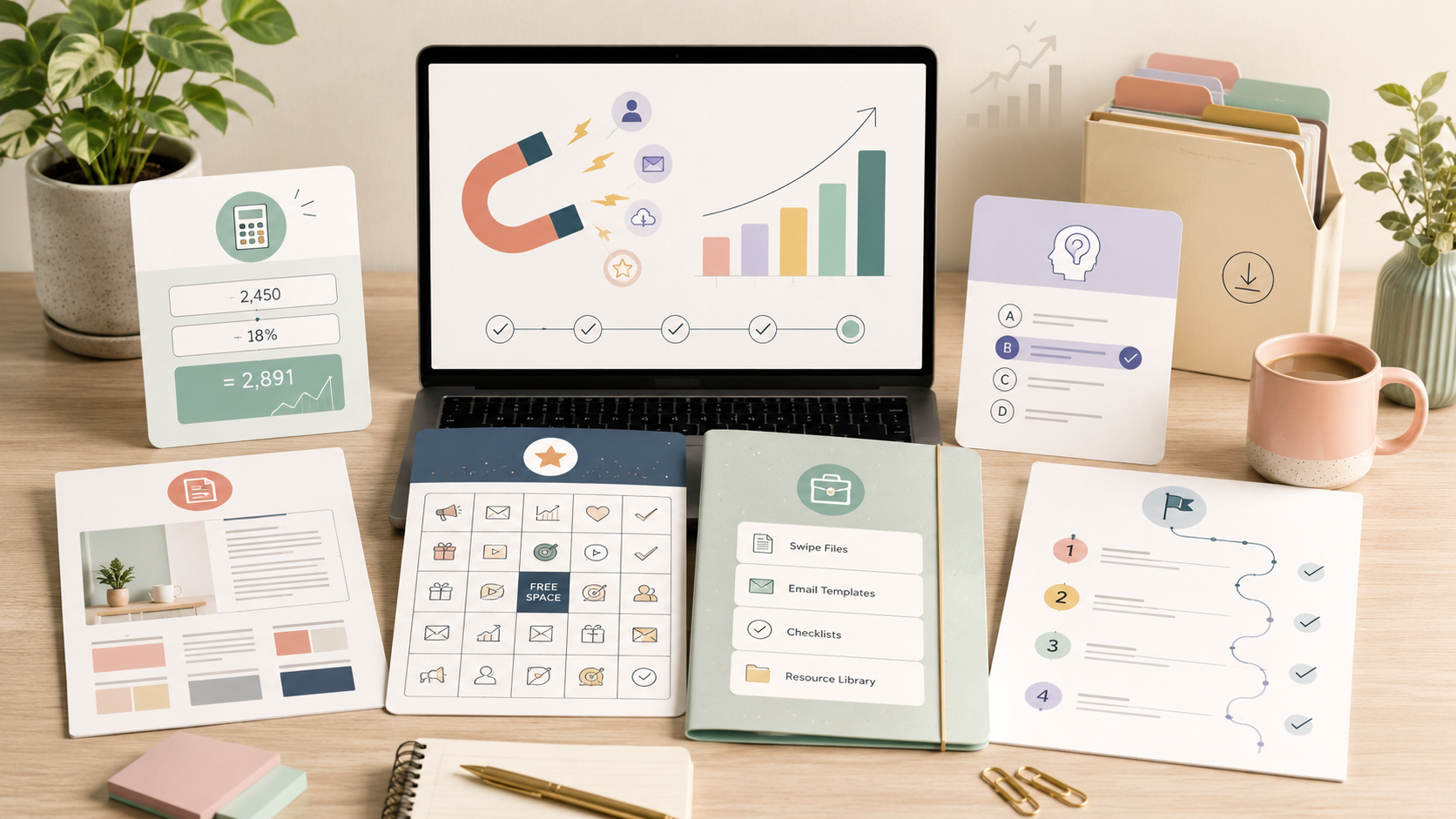
There is nothing wrong with a PDF.
A good checklist, guide, or cheat sheet can still be a useful lead magnet. The problem is that many businesses default to a PDF before asking a more important question:
what would actually be most useful to this audience?
If someone visits a mortgage website, they might get more value from a payment calculator than a 25-page guide to mortgages. A marketer may prefer a ready-to-use content calendar over an ebook about content planning. A teacher may be more likely to download a classroom activity than a generic education guide.
That is the real purpose of a lead magnet.
You give someone something useful enough that they are willing to take the next step with your business, whether that means subscribing to an email list, creating an account, starting a trial, or simply returning to your site later.
AfterSocial already recommends downloadable checklists and templates as a natural way to repurpose useful content, and those formats remain effective because they turn information into something actionable. But they are only two options. A lead magnet can also calculate something, personalize a result, help someone complete a task, or even give them something entertaining to use with other people.
Here are 10 lead magnet ideas that go beyond another generic PDF guide.
1. Build a Calculator That Gives an Immediate Answer
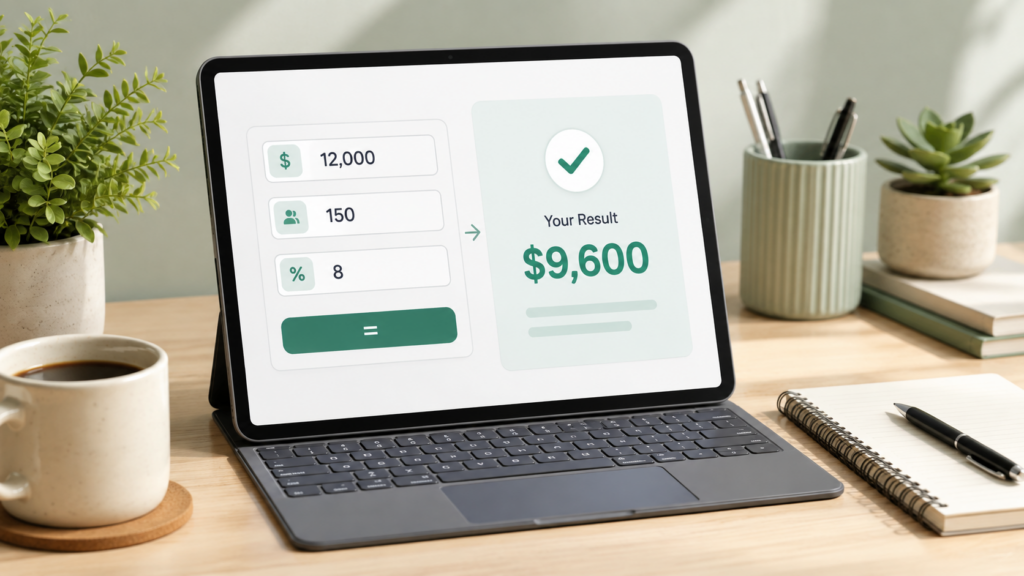
Calculators work because people usually arrive with a question.
How much will this cost?
How much could I save?
What should my budget be?
How long will this take?
Instead of writing a 2,000-word article that makes visitors do the math themselves, give them the answer.
A digital marketing agency could build an ad budget calculator. A SaaS company could create a time-savings calculator. A real estate business could offer a mortgage or affordability calculator. A freelancer could create a project pricing estimator.
The best calculators connect directly to the service or product being sold.
For example, imagine an email marketing platform with a calculator called:
How Much Revenue Could Your Email List Generate?
A visitor enters their list size, average order value, and conversion rate. The calculator provides an estimated result and perhaps shows how improving one of those numbers changes the outcome.
The tool creates value before asking for anything.
You can then offer to email the complete calculation, provide recommendations based on the result, or invite the user to compare different scenarios after creating a free account.
Do not make people fill out twelve form fields before showing even a basic result. A lead magnet should feel like an exchange of value, not an ambush.
Simple calculators often work better than highly sophisticated ones because a visitor can understand the result immediately.
2. Give People a Ready-to-Use Template
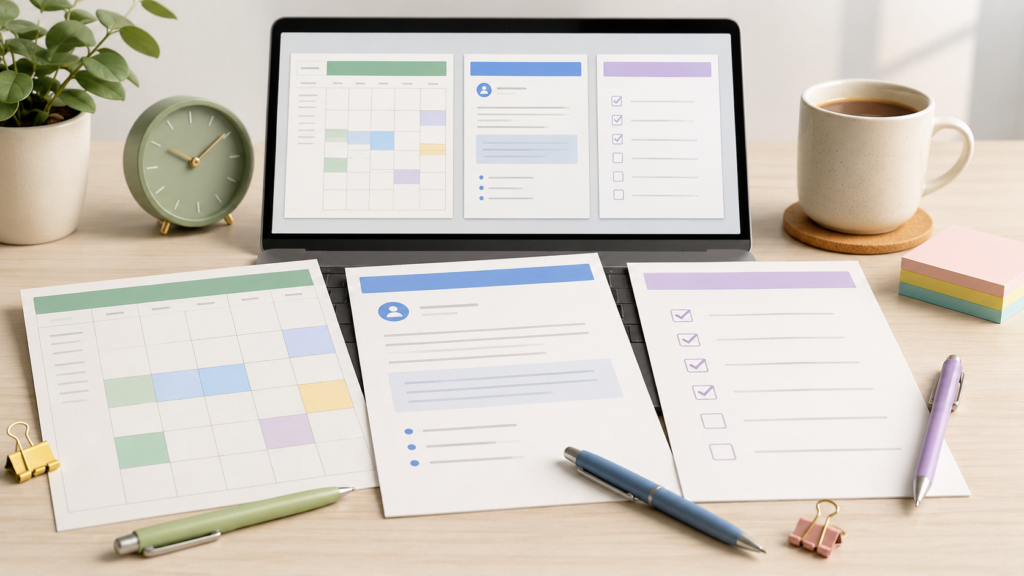
Templates remove the blank page.
That is their biggest advantage.
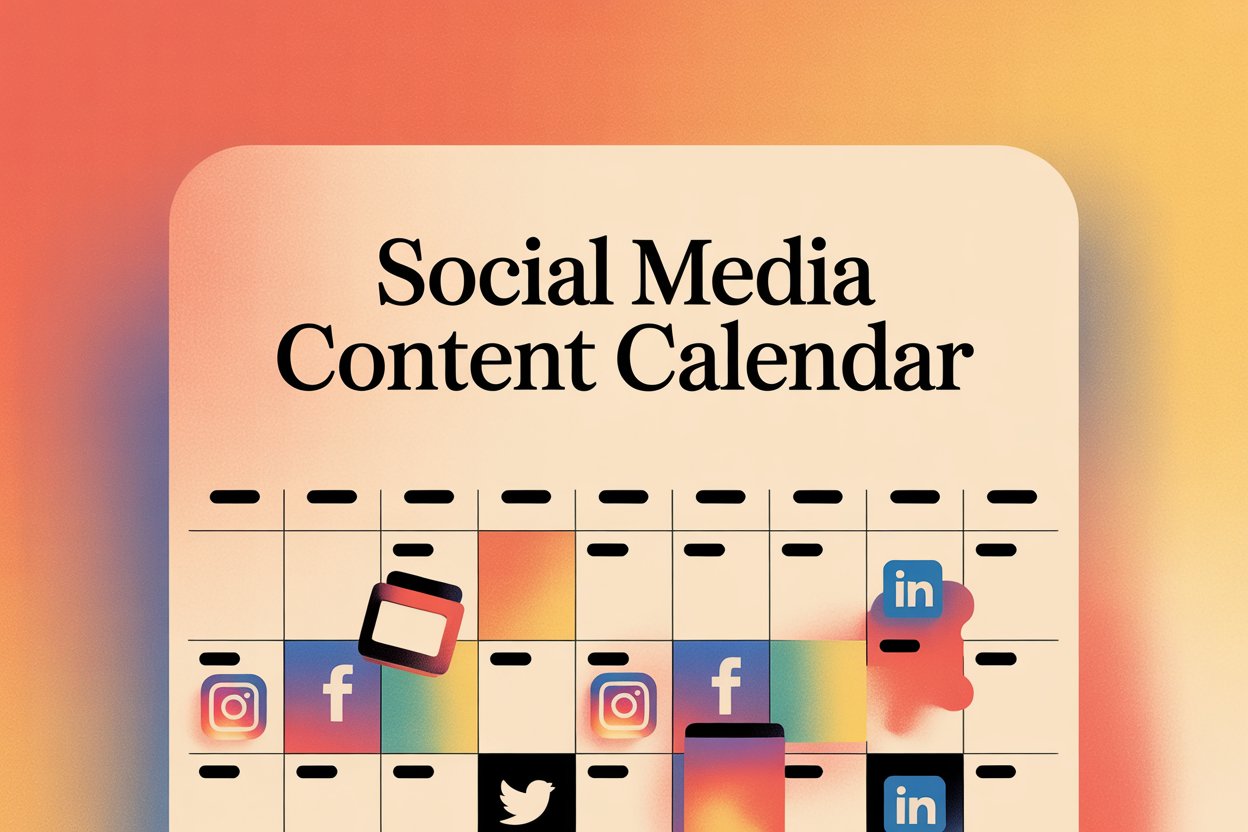
Someone searching for “how to make a social media content calendar” may appreciate an article explaining the process. But someone who already understands the basics might rather download the calendar and start filling it in.
Templates can work in almost any industry.
A marketing site could offer:
30-Day Social Media Content Calendar
A sales consultant could provide:
Cold Outreach Email Template Pack
A project management company could create:
Weekly Team Meeting Agenda
A job site might offer:
Professional Resume Templates
A financial site could provide:
Monthly Budget Spreadsheet
The important distinction is between a template and an example.
An example says, “Here is what this could look like.”
A template says, “Take this and use it.”
That makes templates especially strong when your audience is trying to complete a repetitive task.
Make the file editable whenever possible. A Google Sheet, spreadsheet, document, presentation template, or Notion-style workspace is often more useful than a locked PDF that someone has to rebuild manually.
And do not fill the template with so much branding that using it feels like advertising your company.
Your branding should remind people where the resource came from, not get in their way.
3. Create an Interactive Quiz With a Personalized Result

Quizzes combine curiosity with personalization.
Instead of giving every visitor exactly the same resource, the quiz changes the outcome based on their answers.
That opens up much more interesting possibilities than:
Subscribe to download our free ebook.
A marketing company could offer:
What Type of Content Strategy Does Your Business Need?
A skincare brand could create:
What’s Your Skin Type?
A career website could ask:
Which Career Path Fits Your Strengths?
A financial business might create:
What Kind of Investor Are You?
At the end, the user gets a result based on their answers.
That result can lead naturally into your business.
Someone who receives “You need a search-driven content strategy” can be shown SEO resources.
Someone identified as a beginner investor can receive beginner-friendly material rather than the same content shown to an experienced trader.
The quiz therefore does two jobs: it gives the visitor something interesting and helps you understand the visitor better.
That second part is easy to overlook.
A normal ebook opt-in tells you that someone wanted an ebook.
A quiz can tell you what problem they have, what category they belong to, what they want to achieve, or where they are in the buying journey.
Keep the number of questions reasonable. Unless the result is unusually valuable, most people do not want to complete a 47-question personality test from a company they discovered three minutes ago.
4. Turn a Challenge Into a Lead Magnet
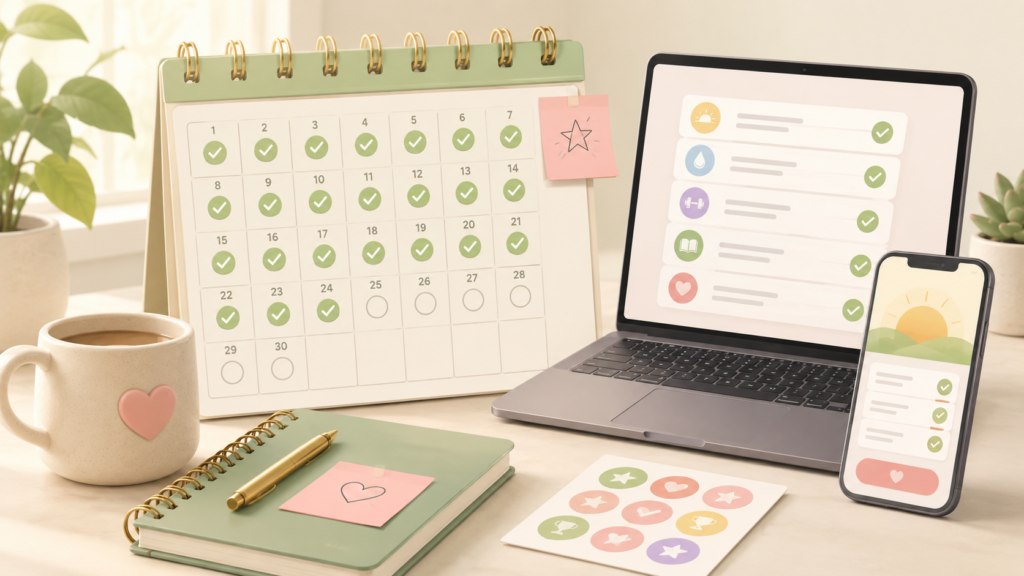
Information is easy to download.
Action is harder.
A challenge bridges that gap by giving someone a reason to actually do something over several days.
Examples include:
7-Day Social Media Consistency Challenge
30-Day Savings Challenge
14-Day Beginner Fitness Challenge
5-Day Declutter Challenge
21-Day Writing Challenge
The visitor signs up and receives a clear task for each day.
This can be delivered through email, a downloadable tracker, a private community, an app, or a combination of formats.
The advantage is that the relationship does not end immediately after the download.
If someone downloads a conventional PDF, they may open it once and disappear.
A seven-day challenge gives you seven natural reasons to communicate.
Day one can explain the first task.
Day two can provide a reminder.
Day three can address the difficulty participants usually encounter.
By the final day, the user has had several interactions with your brand.
Do not use the challenge merely as an excuse to send seven sales emails. The challenge itself needs to produce a result.
If you promise seven days to a cleaner inbox, the participant’s inbox should actually be cleaner after seven days.
5. Make a Custom Bingo Card People Can Actually Use
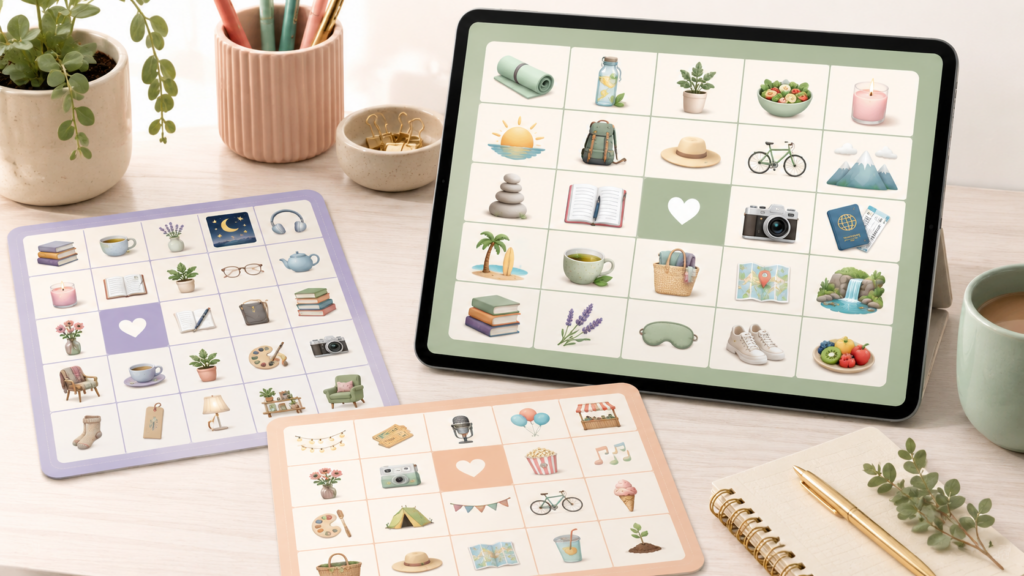
Not every lead magnet needs to teach something.
Sometimes the most useful resource is an activity.
Bingo cards can work especially well when your audience belongs to a clearly defined niche or when your business is connected to events, education, travel, fitness, hobbies, teams, or communities.
A book website could create:
2026 Reading Challenge Bingo
Squares might include:
Read a book over 500 pages.
Read a debut novel.
Read a book recommended by a friend.
Read a book published before 1950.
Finish a book in one weekend.
A fitness brand could create Healthy Habits Bingo.
A travel company could offer Road Trip Bingo for Kids.
A wedding website could make Wedding Planning Bingo.
A teacher resource site could create vocabulary or math bingo.
A company running an industry conference could even make Conference Networking Bingo, with squares such as “meet someone from another country,” “attend a workshop,” or “introduce yourself to a speaker.”
This is also a format where customization matters. A generic bingo board assembled from a standard template is easy to forget. A card built specifically around your audience can become something people print, share, bring to an event, or use for several weeks.
A tool such as Custom Bingo Cards lets you create boards with your own words, images, and emoji, change the colors and layout, add branding, and generate randomized versions so different participants do not all receive the exact same board.
That makes it possible to turn a marketing idea into an actual usable resource rather than a picture of a bingo grid.
The lead-generation setup can remain simple.
For example:
Get Your Free 30-Day Wellness Bingo Card
The visitor enters an email address and receives the printable card.
Then your follow-up content can support the challenge itself: exercise ideas, recipes, reminders, progress tips, or related resources.
The bingo card gets attention.
The surrounding campaign builds the relationship.
6. Offer a Swipe File

A swipe file is essentially a collection of examples someone can reference when they need inspiration.
The format is especially useful in industries where people repeatedly create similar things.
Marketers could use:
50 High-Converting Call-to-Action Examples
Copywriters might want:
100 Email Subject Line Examples
Recruiters could offer:
25 Interview Questions for Hiring Managers
Customer service teams might appreciate:
50 Customer Support Response Templates
Social media managers could download:
100 Hooks for Short-Form Videos
The difference between a swipe file and a guide is that the reader does not necessarily consume it from beginning to end.
They return when they need something.
That makes a strong swipe file useful for months instead of minutes.
Organization matters.
Do not dump 150 examples into one endless document.
Group them.
An email subject-line swipe file could contain sections for urgency, curiosity, announcements, ecommerce, newsletters, re-engagement, and seasonal campaigns.
A video-hook library could separate educational hooks, controversial hooks, storytelling hooks, list-based hooks, and question hooks.
The easier it is to find the right example, the more useful the resource becomes.
You can also update the file periodically and email subscribers when a new version is available. That gives an old lead magnet a second life without creating a completely new resource.
7. Build a Self-Assessment or Scorecard
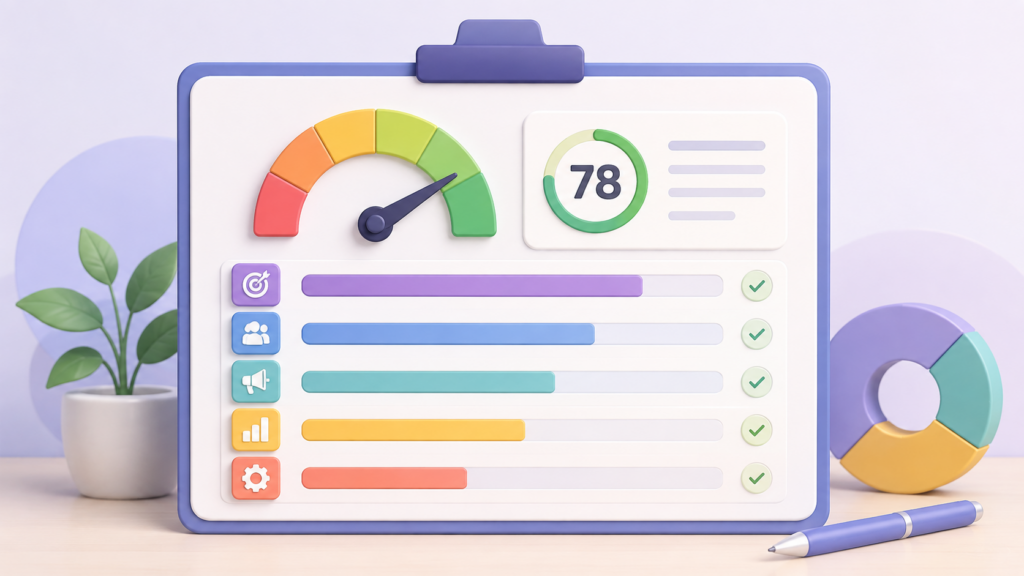
A quiz tells you what category you belong to.
A scorecard tells you how you are doing.
That distinction can make assessments particularly effective for B2B companies, consultants, agencies, coaches, and professional services.
Examples:
SEO Health Score
How Mature Is Your Content Marketing Strategy?
Website Conversion Scorecard
Sales Process Assessment
Cybersecurity Readiness Score
The user answers a set of questions and receives a score.
For example:
Your Content Marketing Maturity Score: 58/100
Then explain what the result means.
Maybe the visitor is strong in content production but weak in distribution.
Maybe the SEO score shows good technical fundamentals but poor internal linking.
Maybe a sales assessment finds that lead generation is healthy while follow-up is inconsistent.
A score is useful because it creates a starting point.
It can also create a natural reason to come back.
Run the assessment today.
Implement the recommendations.
Return in three months and see whether the score improved.
But be careful with fake precision.
If your assessment consists of five simplistic questions, telling someone their marketing strategy scores exactly 73.4 out of 100 creates an impression of scientific accuracy that probably is not justified.
Use the score as a helpful framework, not a diagnostic instrument unless you actually have the methodology to support that claim.
8. Create a Small Free Tool
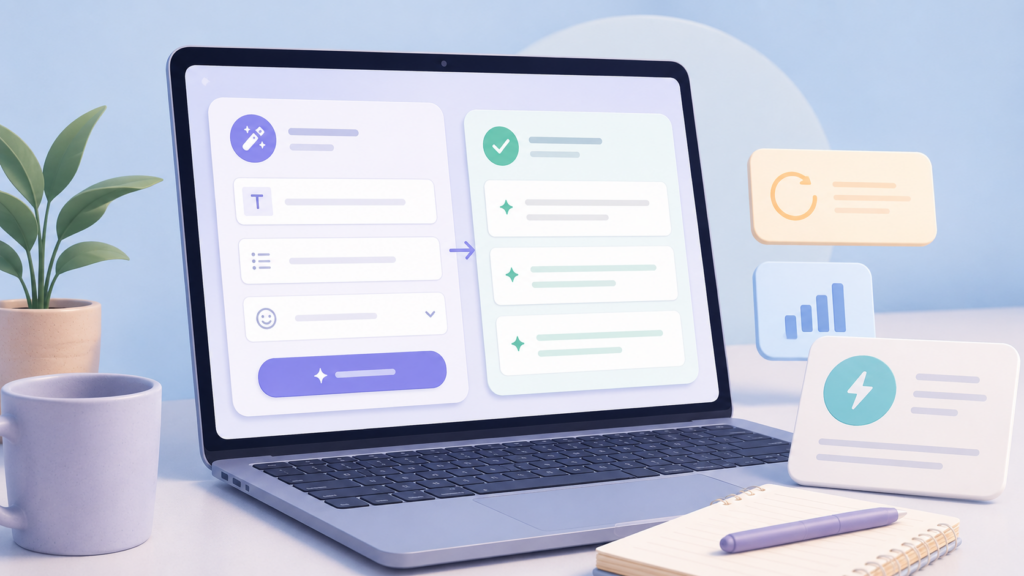
A free tool is one of the hardest lead magnets on this list to build.
It can also be one of the most valuable.
The tool does not have to be a full SaaS product.
Think smaller.
A headline generator.
A character counter.
A UTM builder.
A color palette generator.
A readability checker.
A meeting cost calculator.
A simple invoice generator.
A domain-name idea generator.
A tool can attract people long before they are ready to buy because it solves a small recurring problem.
If they use it repeatedly, your brand becomes familiar without requiring them to read a newsletter every week.
There are several ways to turn the tool into lead generation without destroying its usefulness.
You might allow three free results and ask users to create an account to save more.
You could give the basic result immediately and offer a detailed report by email.
Users might be able to use the tool anonymously but need an account to save history.
Or the tool can remain completely ungated and simply introduce visitors to your paid product.
Do not assume every lead magnet must sit behind an email form.
Sometimes the tool itself is the acquisition channel.
9. Package a Toolkit Instead of One Resource
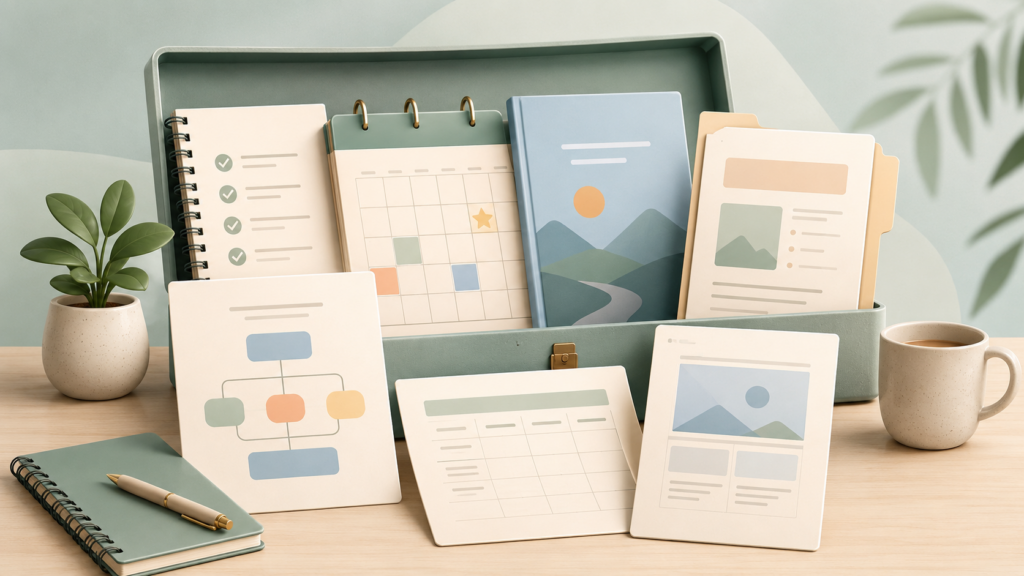
Sometimes one file is not enough.
If someone is trying to complete a larger task, combine several small resources into one toolkit.
For example:
Small Business Social Media Starter Kit
could contain:
A content calendar.
A caption template.
A hashtag research worksheet.
A social media audit checklist.
A brand voice worksheet.
A simple analytics tracker.
None of these resources needs to be huge.
Together, however, they solve more of the problem.
Other examples include:
First-Time Homebuyer Toolkit
Freelancer Client Onboarding Kit
Wedding Planning Starter Kit
New Manager Toolkit
Job Search Toolkit
The strongest toolkits usually revolve around one specific situation.
“Ultimate Business Toolkit” is too broad.
“First 30 Days as a New Manager Toolkit” tells the visitor exactly why they need it.
A toolkit can also increase the perceived value of otherwise simple resources.
Someone may not enter an email address for a one-page meeting agenda.
But the same agenda inside a management toolkit with an onboarding checklist, one-on-one template, feedback guide, and weekly planner feels much more substantial.
Still, avoid adding weak files solely to make the bundle sound larger.
Ten useful resources beat fifty pieces of filler.
10. Create a Personalized Plan

Most lead magnets give the user information.
A personalized plan tells them what to do next.
That can be extremely valuable because people often know what they want but are uncertain about the sequence.
A fitness business might create:
Your Beginner Workout Plan
A marketing agency:
Your 90-Day Marketing Roadmap
A financial education company:
Your Debt Payoff Starting Plan
A career website:
Your Job Search Action Plan
The visitor answers a few questions first.
What is your goal?
What is your starting point?
What resources do you have?
What is your biggest obstacle?
The system then recommends a sequence of actions.
This does not need to involve sophisticated AI.
A simple branching system can be enough.
For example, a marketing plan might change based on whether the company is B2B or B2C, whether it already has website traffic, and whether its primary goal is leads or ecommerce sales.
The result should feel specific enough to justify the questions.
If every combination produces the same generic five tips, people will notice.
A personalized plan also creates an excellent transition into paid services.
The free version tells the user what needs to happen.
Your product, service, coaching, software, or consultation can help them actually do it.
What Makes a Lead Magnet Worth Downloading?
The format is not the most important thing.
You can create an interactive quiz that nobody wants.
You can build a beautiful calculator that answers a question nobody asks.
You can spend three weeks creating a 50-page ebook that people download and never open.
A strong lead magnet usually solves a small, specific problem quickly.
That means the first question should not be:
“What can we give away?”
It should be:
“What is someone trying to accomplish immediately before they might need our product?”
A content marketing platform might help users plan content.
A mortgage company might help buyers understand affordability.
A fitness brand might help someone start a routine.
A wedding business might help a couple organize their planning.
A teacher platform might help someone prepare tomorrow’s class.
The closer your lead magnet sits to that real problem, the more likely it is to attract the right people rather than simply the largest number of email addresses.
This also explains why a smaller lead magnet can outperform something that took much longer to create.
A 100-page marketing ebook sounds valuable.
But if someone is sitting at their desk thinking, “I have no idea what to post on Instagram tomorrow,” a one-page list of 50 content prompts may be far more useful.
Should You Gate Every Lead Magnet?
No.
This is one of the easiest mistakes to make.
Businesses often assume that if they create something useful, they must immediately hide it behind an email form.
But sometimes making the resource completely free creates more value.
A calculator that ranks in Google can continuously attract visitors.
A useful generator can earn backlinks.
A template can spread through social media.
A tool can introduce thousands of people to a product.
You can then place an optional signup around the resource.
For example:
Use the calculator for free.
Enter your email if you want the detailed report.
Or:
Create the bingo card for free.
Create an account if you want to save it.
Or:
Use the template.
Subscribe if you want new versions each month.
The lead magnet does not always have to be the thing behind the gate.
Sometimes it is the reason someone reached your website in the first place.
Match the Lead Magnet to the Buying Journey
Someone who discovered your business 30 seconds ago probably does not want to schedule a sales call.
A useful free resource creates a smaller step.
At the top of the funnel, that might be a quiz, calculator, bingo card, template, checklist, or free tool.
Someone further along may want an assessment, detailed comparison, case study, webinar, or personalized plan.
The format should reflect what the visitor is ready to do.
That is also why copying a competitor’s lead magnet is not necessarily useful.
Their audience may be at a different stage.
Their product may solve a different problem.
Their traffic may come from different channels.
Instead of asking which lead magnet is popular, ask which one creates the most logical next step toward your business.
Stop Starting With “Let’s Make an Ebook”
An ebook can still be the right answer.
Sometimes people genuinely need a detailed guide.
But it should be the result of your decision, not the default.
Start with the problem.
If people need to calculate something, make a calculator.
If they need to organize something, give them a template.
If they need to understand themselves, build a quiz or assessment.
If they need motivation, create a challenge.
If they need a useful activity, make a bingo card.
If they need examples, build a swipe file.
If they need a repeated utility, consider a tool.
If they need several resources to complete one task, package a toolkit.
And if they need direction, give them a plan.
The best lead magnet is not the one that looks most impressive on your marketing calendar.
It is the one your audience is actually glad they found.