YouTube Marketing Strategy: How To Use Video To Grow Your Brand and Drive Traffic in 2026
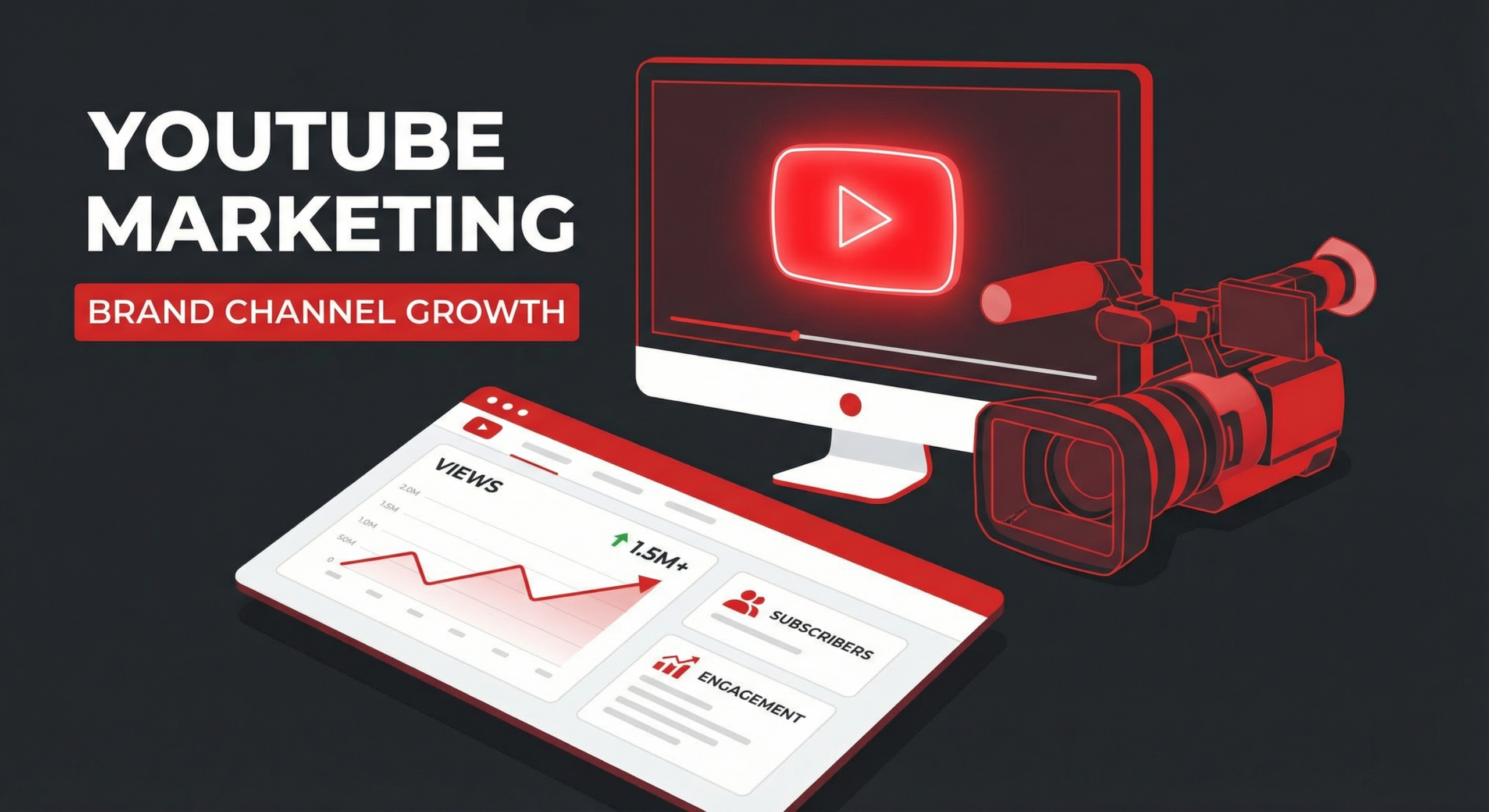
YouTube is the second-largest search engine on the planet, and millions of people use it every day to solve problems, learn new skills, and discover brands. A focused YouTube marketing strategy can drive consistent, compounding traffic to your business for years. In 2026, brands that treat YouTube as a search engine are seeing the biggest returns.
Why YouTube Is a Long-Term Traffic Machine
Unlike social media posts that disappear in hours, YouTube videos keep generating views for months and years. A single well-optimized video can bring in thousands of visitors long after you hit publish. That compounding effect makes YouTube one of the highest-ROI channels in digital marketing.
YouTube as a Search Engine
People search YouTube for tutorials, reviews, comparisons, and how-to guides every single day. Ranking for the right searches puts your brand in front of high-intent viewers. These viewers are already looking for what you offer, which makes conversion far easier.
The Role of Watch Time in Growth
YouTube’s algorithm rewards videos that hold viewer attention. High watch time signals that your content is genuinely useful. Focus on keeping viewers engaged from the first second to the last, and the algorithm will reward you with more organic distribution.
How YouTube Feeds Your Website Traffic
Every video you publish is an opportunity to send viewers to your website. Include links in your video descriptions and use verbal calls-to-action throughout your content. Many brands find YouTube becomes their top referral traffic source within 12 to 18 months of consistent publishing.
How To Build a YouTube Content Strategy From Scratch
Random video publishing does not build a channel. You need a clear content plan tied to real audience needs. A structured strategy ensures every video you create moves your business goals forward.
Defining Your Channel’s Core Topic Area
Pick a focused topic area that aligns with your brand and your audience’s interests. Avoid trying to cover too many topics at once, especially early on. A tightly focused channel signals expertise to both viewers and the YouTube algorithm.
Researching High-Value Keywords
Use tools like TubeBuddy, VidIQ, or Google’s Keyword Planner to find what your audience is actually searching for. Look for keywords with solid search volume and manageable competition. Target these keywords directly in your video titles, descriptions, and tags.
Planning a Content Calendar
Map out four to eight weeks of video topics before you start filming. A content calendar keeps you consistent even during busy periods. Consistency is one of the most important factors in building a growing YouTube channel.
Optimizing Your Videos for Search and Discovery
Good content alone is not enough on YouTube. You need to optimize every element of your video for search and click-through. Smart optimization makes the difference between a video that gets found and one that gets ignored.
Writing Click-Worthy Titles
Your title is the first thing a potential viewer sees. Include your target keyword naturally and make the title specific and benefit-driven. Titles like “How To Fix X in 5 Minutes” consistently outperform vague titles every time.
Crafting Descriptions That Rank
Write at least 200 words in your video description. Include your target keyword in the first two sentences. Add secondary keywords naturally throughout, and always include links to your website and related videos.
Using Thumbnails as a Conversion Tool
Your thumbnail determines whether someone clicks your video or scrolls past. Use high-contrast images, clear text overlays, and expressive faces when relevant. Test different thumbnail styles and track which ones earn the highest click-through rates in your YouTube Studio data.
Video Production That Keeps Viewers Watching
You do not need a Hollywood budget to make effective YouTube content. You do need clear audio, good lighting, and a well-structured delivery. Viewers forgive mediocre visuals far more readily than they forgive bad audio.
Structuring Your Videos for Retention
Open with your strongest hook in the first 15 seconds. State clearly what the viewer will learn or get from watching. Deliver on that promise throughout the video, and close with a clear next step.
Audio and Lighting Basics
Invest in a decent USB microphone before you upgrade anything else. Good lighting makes even a smartphone camera look professional. A simple ring light or window light dramatically improves how your video looks on screen.
Editing for Pacing and Engagement
Cut anything that does not add value. Tight editing keeps your viewer retention high and your watch time strong. Use jump cuts, text overlays, and chapter markers to help viewers navigate your content easily.
How To Grow Your YouTube Channel Faster
Organic growth on YouTube takes time, but certain strategies accelerate it significantly. Smart channel management and community-building move the needle faster than publishing alone. Use every available lever to grow your subscriber count and views.
Publishing on a Consistent Schedule
Pick a publishing cadence you can maintain for at least six months. One video per week is a strong starting target for most brands. Subscribers who know when to expect new content are more likely to stay engaged long-term.
Engaging With Comments Actively
Reply to comments, especially in your first 24 hours after publishing. Engagement signals to YouTube that your video is creating community. Active comment sections also build trust with new viewers who are evaluating whether to subscribe.
Collaborating With Other Creators
Find creators in adjacent niches and propose genuine collaboration ideas. A guest appearance or shared project exposes your channel to a warm, relevant audience. Even one strong collaboration can add thousands of targeted subscribers quickly.
Converting YouTube Viewers Into Customers
Views and subscribers are vanity metrics unless they lead to business outcomes. Your YouTube strategy should have a clear path from viewer to customer. Build that path intentionally into every video you create.
Using End Screens and Cards
End screens appear in the final 20 seconds of your video. Use them to promote related videos, your playlist, and your channel subscription button. Cards let you link to external websites mid-video, which is perfect for driving traffic to landing pages.
Including Strong Calls-to-Action
Tell viewers exactly what to do next at the end of every video. Whether that is visiting your website, downloading a resource, or booking a call, be direct and specific. Vague CTAs produce vague results.
Building a Lead Magnet Around Your Content
Create a free resource that complements your most popular videos. Offer a checklist, template, or guide in your video description in exchange for an email address. This bridges the gap between YouTube viewer and captured lead.
YouTube Marketing Strategy: Key Metrics Compared
| Metric | What It Measures | Why It Matters | Target Benchmark |
|---|---|---|---|
| Click-Through Rate (CTR) | Percentage of impressions that become views | Measures title and thumbnail effectiveness | 4-10% is healthy for most niches |
| Average View Duration | How long viewers watch your video on average | Key factor in algorithm distribution | 40-60% of total video length |
| Subscriber Conversion Rate | Views that result in new subscribers | Indicates audience resonance | 0.5-2% per video is solid |
| Traffic Source: YouTube Search | Views coming from search results | Measures SEO effectiveness | 30-50% for search-focused channels |
| Impressions | How often your thumbnail is shown | Indicates algorithm reach | Higher is better; grows with consistency |
| External Traffic | Views from outside YouTube | Measures off-platform promotion success | Varies by promotion strategy |
Frequently Asked Questions
How long should my YouTube videos be in 2026?
Video length should match your content’s natural depth. Tutorials and in-depth guides perform well at 8 to 15 minutes. Shorter, focused answer videos can do just as well at 3 to 5 minutes if they fully address the viewer’s question.
How many videos do I need before my channel starts growing?
Most channels begin to see consistent organic growth after publishing 20 to 30 well-optimized videos. The first 10 to 15 videos are largely a learning and testing phase. Stay consistent and treat early videos as practice rounds.
Do I need to show my face on camera to succeed on YouTube?
No. Many successful channels use screen recordings, animations, voiceovers, or stock footage. What matters is that your content delivers clear value and keeps viewers watching. Face-on-camera can build personal connection, but it is not required.
What is the best way to research video topics?
Start with YouTube’s autocomplete feature to find real search queries. Use TubeBuddy or VidIQ to evaluate keyword competition and search volume. Also check what your competitors rank for and find gaps you can fill.
How does YouTube help my website’s SEO?
YouTube videos can rank in Google search results alongside web pages. Embedding your videos on relevant blog posts also increases time-on-page, which is a positive SEO signal. A consistent YouTube presence strengthens your brand’s overall search footprint.
Can small brands compete on YouTube against large companies?
Yes. YouTube rewards relevance and quality, not just budget. A smaller brand with highly specific, well-optimized videos can outrank a large competitor that produces generic content. Niche focus is your competitive advantage.
How important are YouTube Shorts for channel growth?
YouTube Shorts can boost your channel’s visibility and subscriber count. They reach a different discovery surface than long-form videos. Use Shorts to complement your main content strategy rather than replace it.
Conclusion
YouTube marketing rewards patience, consistency, and strategic thinking. Every video you publish is a long-term asset that keeps working for you around the clock. Build your strategy around your audience’s real search needs, optimize every element for discoverability, and keep showing up. The brands that win on YouTube in 2026 are the ones that treat it like the search engine it truly is.