Dark Social: What It Is and Why It Matters for Your Marketing Attribution
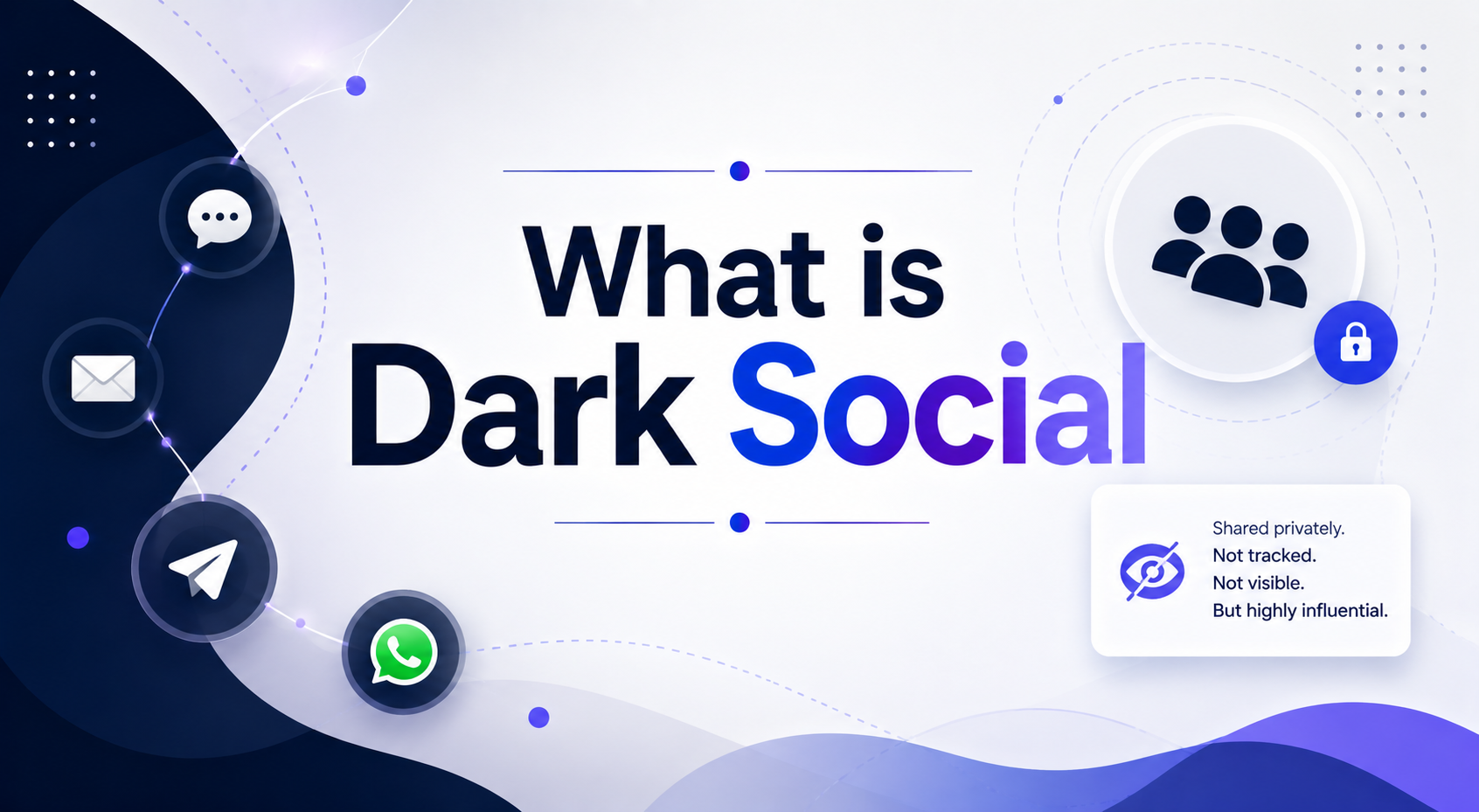
Dark social is one of the most underappreciated challenges in digital marketing attribution, and understanding it is increasingly essential for accurately evaluating your content and marketing performance. The term refers to private social sharing — content shared via WhatsApp, iMessage, Slack, email, and direct messaging — that arrives at your website as “direct” traffic in analytics tools rather than being attributed to the social channel where it was actually shared. If your analytics show a suspiciously high percentage of “direct” traffic, much of it is probably dark social.
What Is Dark Social and Why Does It Exist?
Dark social exists because most analytics tools track referral traffic using the HTTP referrer header — the signal that tells a receiving website where the visitor came from. When content is shared via a messaging app, private message, or email, the referrer header is either absent or stripped for privacy reasons. The receiving website sees the visit as “direct” — as if the person typed the URL directly into their browser, when in fact they followed a shared link.
The Scale of the Problem
Research by RadiumOne estimated that approximately 84% of all social content sharing happens via dark social channels. This is not a marginal attribution error — it means that most analytics dashboards significantly undercount the contribution of content marketing, social media, and word-of-mouth to business results. Decisions made based on these incomplete attribution pictures systematically underinvest in channels that drive dark social sharing.
Which Channels Produce Dark Social
WhatsApp, iMessage, Signal, Telegram, and Facebook Messenger account for the majority of dark social sharing because they are the dominant private messaging platforms globally. Email also generates dark social when recipients forward or copy links. Slack and Microsoft Teams generate dark social in professional contexts. Even copy-pasting a URL from Instagram’s browser strips the referrer.
How Dark Social Affects Marketing Attribution
The downstream effects of dark social on marketing decision-making are significant and systematically distorting. Content that performs well on dark social channels appears to perform poorly in attribution reports, leading to underinvestment in content types and formats that are actually driving business results.
The Direct Traffic Overcount
In Google Analytics 4 and most analytics platforms, “direct” traffic is a catch-all for visits where no referrer is present. For most content marketing sites, 30-50% of sessions are attributed to direct when a substantial portion of this traffic is actually dark social referrals. This inflates the perceived organic reach of your brand while making specific content performance hard to measure accurately.
Content Strategy Implications
Highly shareable content — emotional stories, controversial opinions, practical how-to guides — performs disproportionately well in dark social channels because these are the content types people share privately with friends and colleagues. If this content appears to drive only “direct” traffic, analytics reports understate its value relative to content optimized for tracked channels.
How to Measure and Reduce Dark Social Attribution Errors
You cannot eliminate dark social, but you can significantly improve your measurement accuracy through a combination of technical tracking, survey data, and attribution modeling.
UTM Parameters for Private Sharing
The most practical tactical improvement is adding UTM parameters to any URLs you share in private channels under your control — email newsletters, employee Slack communications, and any content your team shares internally. Tools like Bitly and Rebrandly allow creating shortened, tracked links that preserve referral data even through private sharing.
Self-Reported Attribution Surveys
Adding a simple “How did you hear about us?” field to lead capture forms and checkout processes provides self-reported attribution data that supplements analytics tracking. This data is imperfect but captures dark social pathways that no technical solution can track — the “my colleague sent me this” and “I heard about it in a WhatsApp group” sources that never appear in analytics.
Sharable URL Tools
Creating share buttons that pre-populate messaging apps with tracked URLs (rather than leaving users to copy-paste the raw URL) preserves referrer data for a portion of private sharing. While this does not capture organic copy-paste sharing, it improves tracking for intentional sharing that uses your share functionality.
Dark Social Tracking Approaches Compared
| Approach | Implementation Effort | Attribution Accuracy Improvement | Cost | Best For |
|---|---|---|---|---|
| UTM parameters (outbound) | Low | Medium | Free | Email, owned channels |
| Self-reported surveys | Low | Medium-High | Free-Low | Lead gen, e-commerce |
| Share buttons with UTMs | Medium | Low-Medium | Free-Low | Content-heavy sites |
| Multi-touch attribution tools | High | High | $500+/mo | Enterprise, high-budget |
| Media mix modeling | Very High | Very High | $5,000+ | Large advertisers |
Dark Social as a Channel Strategy
Beyond measurement improvement, the most forward-thinking marketers in 2026 are deliberately creating content and experiences optimized for dark social sharing rather than just trying to measure it better.
Creating Dark Social-Optimized Content
Content that people want to share privately with specific individuals performs best in dark social: highly practical guides (“this is exactly what you need”), emotional stories with personal relevance, controversial or surprising data points, and content that makes the sharer look smart, caring, or ahead of the curve by sending it. Creating a private sharing intention requires a different editorial lens than creating public engagement.
Making Content Easy to Share Privately
Adding explicit “send to a friend” CTAs, creating easily copyable short URLs, and making individual sections of long-form content easily linkable (anchor links) all increase dark social sharing rates by reducing the friction of private sharing.
Frequently Asked Questions
How much of my direct traffic is actually dark social?
Estimates vary by industry and content type, but 30-50% of traffic attributed to “direct” in standard analytics is typically dark social referrals for content-heavy sites. E-commerce sites with strong word-of-mouth can see even higher percentages.
Can dark social traffic be completely tracked?
No. The privacy mechanisms that create dark social (stripped referrer headers in messaging apps) are fundamental to how these platforms work and cannot be overcome through external tracking. You can reduce the measurement gap but not eliminate it.
Should I report dark social as “direct” traffic to stakeholders?
It depends on your attribution philosophy. Many marketers now report a combined “direct + dark social estimate” figure that is adjusted based on known dark social patterns. Being transparent with stakeholders about the limitation of standard attribution reporting — and explaining that direct traffic includes dark social — prevents incorrect conclusions about channel performance.
Does dark social matter for SEO?
Indirectly. Content that performs well in dark social channels tends to get more backlinks, more branded searches, and more direct engagement signals over time — all of which positively influence SEO. Dark social is also a strong signal of genuine content quality, which correlates with the ranking signals search engines increasingly prioritize.
Conclusion
Dark social is not going away — if anything, the shift toward private messaging as the dominant online communication format means it will grow. The marketers who will win in 2026 and beyond are those who stop fighting dark social’s untraceable nature and instead adapt their strategy: improving measurement at the margins with UTM parameters and self-reported surveys, creating content explicitly optimized for private sharing, and developing attribution frameworks that acknowledge the limits of click-based tracking. Your “direct” traffic is telling you something important about your content’s organic resonance — the question is whether you are listening.