Social Commerce Strategy: How to Sell on Instagram, TikTok, and Pinterest in 2026
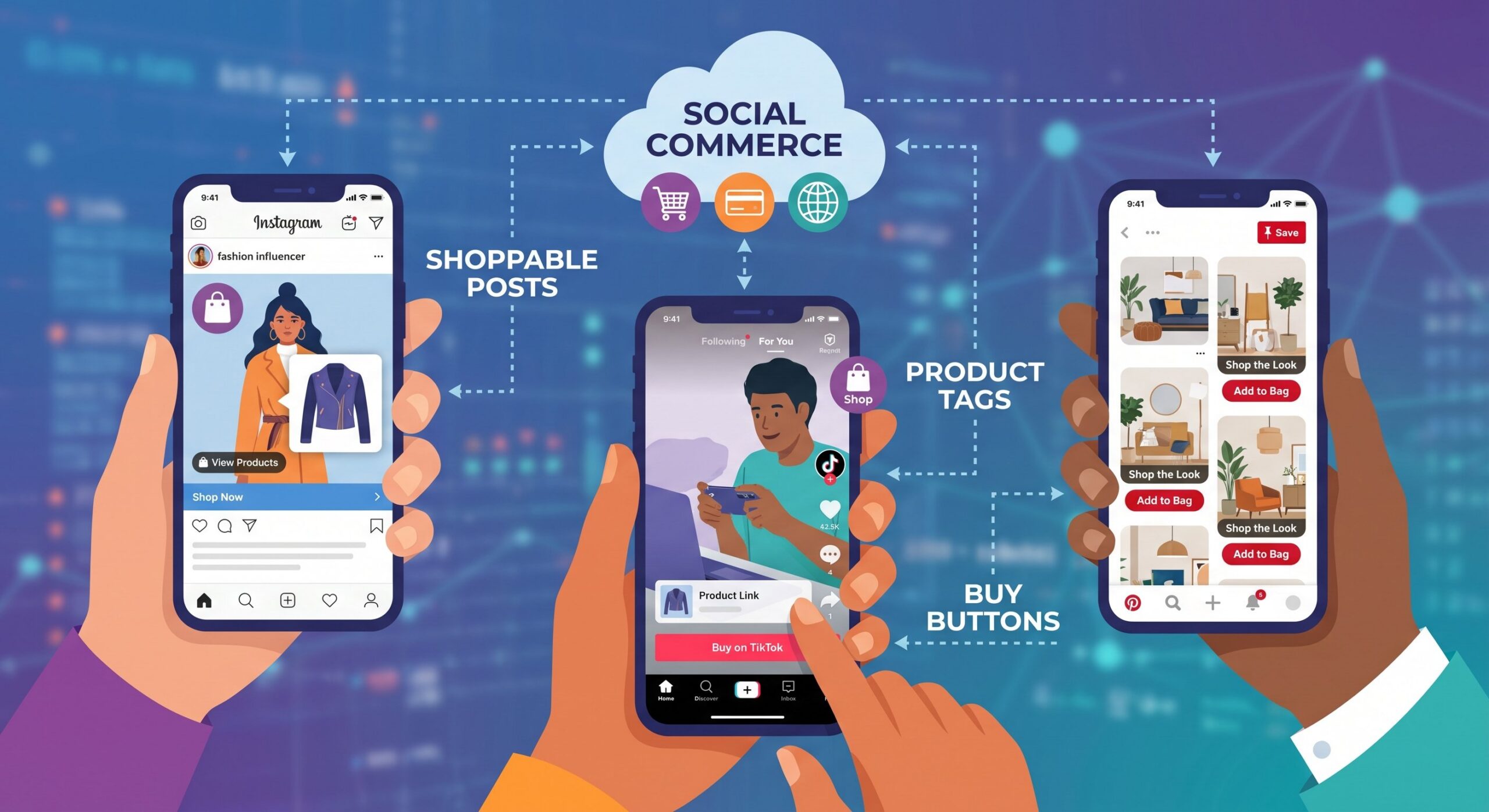
Social commerce—the integration of shopping directly into social media platforms—has moved from emerging trend to mainstream retail channel. In 2026, consumers don’t just discover products on social media and go elsewhere to buy; they complete purchases without ever leaving their feed. Instagram Shopping, TikTok Shop, and Pinterest Shopping have transformed these platforms into full-fledged storefronts. Brands that haven’t built a social commerce strategy are leaving significant revenue on the table. This guide shows you how to build one that converts.
What Is Social Commerce and Why It’s Exploding in 2026
Social commerce refers to the buying and selling of products directly within social media platforms, eliminating the friction of redirecting users to external websites. The numbers explain the urgency: global social commerce sales are projected to surpass $1.2 trillion in 2025 and continue growing at 30%+ annually.
Why Consumers Prefer Social Commerce
Frictionless purchasing is the core advantage. When a user sees a product they want while scrolling their feed, any additional step (leaving the app, finding the website, navigating to the product, entering payment info) introduces an opportunity to abandon. Native checkout removes all these steps. Additionally, social proof—likes, reviews, creator endorsements visible in the same context as the product—significantly increases purchase confidence.
The Social Commerce Platforms in 2026
- Instagram Shopping: Product tags, Collections, Instagram Checkout, and Shops tab
- TikTok Shop: In-feed product links, live shopping, creator affiliate program
- Pinterest Shopping: Product pins, Catalogs, Shopping Spotlights
- Facebook Shops: Unified with Instagram Shops; strong for older demographics
- YouTube Shopping: Product tags on videos, live shopping, affiliate links
Instagram Shopping Strategy
Instagram Shopping remains the most established social commerce channel for most product categories, offering the deepest integration between content discovery and purchase.
Setting Up Instagram Shopping
Connect your product catalog to Instagram via Commerce Manager (Facebook’s commerce hub). Tag products in feed posts, Stories, Reels, and Live videos. Enable Instagram Checkout to allow purchases without leaving the app—this is available to eligible businesses with products that meet Meta’s commerce policies.
Content That Sells on Instagram
The highest-converting Instagram shopping content combines aspirational lifestyle imagery with clear product context. Show products in use, in context, and in ways that allow viewers to imagine the product in their own lives. Reels with product tags consistently outperform static posts for both reach and conversion in 2026. Product close-ups, sizing videos, and before/after demonstrations are particularly effective.
Instagram Live Shopping
Live shopping events on Instagram drive urgency and real-time engagement. Brands that host regular live shopping events (weekly or bi-weekly) build audience habits that translate into predictable revenue spikes. Combine limited-time offers with live shopping to maximize conversion rates.
TikTok Shop Strategy
TikTok Shop has become the fastest-growing social commerce channel globally, particularly for consumer goods, beauty, fashion, and lifestyle products targeting demographics under 35.
How TikTok Shop Works
Brands can list products directly in TikTok Shop and tag them in organic videos, paid ads, and live streams. TikTok’s creator affiliate program allows any creator to earn commission by tagging your products—effectively turning TikTok’s entire creator ecosystem into your sales force.
The TikTok Shop Content Formula
TikTok Shop success hinges on native-feeling content that demonstrates products in entertaining, relatable ways. Overly polished ads underperform authentic demonstrations. The highest-converting formats: unboxing videos, transformation videos (before/after), “things I found on TikTok” style discoveries, and problem/solution demonstrations. Always include the product link in the video itself, not just the caption.
TikTok Live Shopping
TikTok Live shopping events can be extraordinarily powerful—the platform’s algorithm heavily promotes live content, and real-time purchasing with countdown timers drives strong conversion. Successful TikTok live shopping requires entertainment value, not just product demonstration. The most effective hosts treat live shopping like a show, with personality, humor, and audience interaction throughout.
Pinterest Shopping Strategy
Pinterest’s shopping features are often underutilized but offer unique advantages: high purchase intent from day one, long content lifespan (Pins drive traffic for months or years), and strong performance for home, fashion, beauty, food, and lifestyle categories.
Setting Up Pinterest Shopping
Upload your product catalog to Pinterest to create a Catalog. Products automatically generate Product Pins with real-time pricing and availability. Curate boards around customer needs and occasions rather than just product categories—”Summer Outdoor Living” converts better than “Patio Furniture.”
Pinterest Shopping Ads
Catalog Shopping Ads on Pinterest allow you to promote your entire product catalog with dynamic pricing and availability updates. Pinterest’s intent-based audience (users actively searching for inspiration to buy) makes these ads highly efficient for conversion campaigns. Shopping Spotlights—curated collections created by Pinterest editors—can provide massive organic discovery for selected brands.
Social Commerce Platform Comparison for Brands
| Platform | Best Categories | Checkout Available | Creator Affiliate | Avg. Conversion Rate |
|---|---|---|---|---|
| Fashion, beauty, lifestyle, home | Yes (US) | Creator Marketplace | 1-3% | |
| TikTok Shop | Beauty, fashion, gadgets, food | Yes | Yes (robust) | 2-5% |
| Home, fashion, DIY, food, beauty | Select merchants | Limited | 2-4% | |
| Facebook Shops | All categories | Yes (US) | Creator Marketplace | 1-2% |
| YouTube Shopping | Tech, beauty, fashion, gaming | Via Google | Yes | 1-3% |
Building a Unified Social Commerce Strategy
The most effective social commerce strategies don’t treat each platform in isolation—they create a connected ecosystem where content on one platform drives awareness, and the most purchase-ready audiences find conversion opportunities on the platform they prefer.
Content Repurposing for Multi-Platform Commerce
A single product video can be adapted for all platforms: full-length on YouTube, 60-second version for Instagram Reels with product tags, 30-second version for TikTok with TikTok Shop link, and a still-frame with product Pin on Pinterest. The production effort multiplies across all channels.
Creator and Affiliate Partnerships
Partnering with creators on TikTok Shop’s affiliate program and Instagram’s Creator Marketplace creates performance-based distribution. You pay commissions only when sales occur, making creator partnerships highly capital-efficient for social commerce compared to traditional influencer sponsorships.
Frequently Asked Questions
What product types sell best on social commerce platforms?
Beauty, skincare, fashion, home goods, and impulse-buy items under $100 consistently perform best. Products that benefit from demonstration (showing how they work or look in use) are particularly well-suited to video-native social commerce platforms.
How much does it cost to set up TikTok Shop?
TikTok Shop is free to set up for sellers. TikTok charges a transaction fee (currently 5-8% depending on category) on sales. There are no monthly fees for the basic seller account.
Do I need a large following to sell on social commerce platforms?
No. TikTok Shop’s affiliate program allows you to leverage other creators’ audiences regardless of your own follower count. Instagram Shopping works through both organic content and paid ads that don’t require follower count. Follower count helps but isn’t a prerequisite for social commerce success.
How do I handle inventory management across multiple social commerce platforms?
Use a centralized inventory management system like Shopify, WooCommerce, or BigCommerce that integrates with all major social commerce platforms. This ensures real-time inventory sync so you never oversell on one platform while stock is available on another.
What’s the difference between social commerce and social media advertising?
Social media advertising drives traffic to your website or app where the purchase happens. Social commerce enables the complete purchase within the social platform itself. Social commerce generally converts at higher rates because it eliminates the friction of leaving the platform.
How do I measure social commerce ROI?
Track platform-native metrics: orders, revenue, and conversion rate in each platform’s seller analytics. Use UTM parameters and server-side attribution for sales that start on social and complete elsewhere. Compare ROAS (return on ad spend) across channels to optimize budget allocation.
Conclusion
Social commerce in 2026 isn’t a future trend—it’s the present reality of how consumers discover and purchase products. Instagram, TikTok Shop, and Pinterest each offer distinct advantages depending on your product category and target audience. The brands winning in social commerce are those that create native-feeling content that demonstrates products authentically, leverage creator partnerships for scalable reach, and build consistent live shopping events that drive urgency. Start with the platform where your audience is most active, master it, then expand.