Email Marketing Strategy: Advanced Guide to Growing and Converting Your List
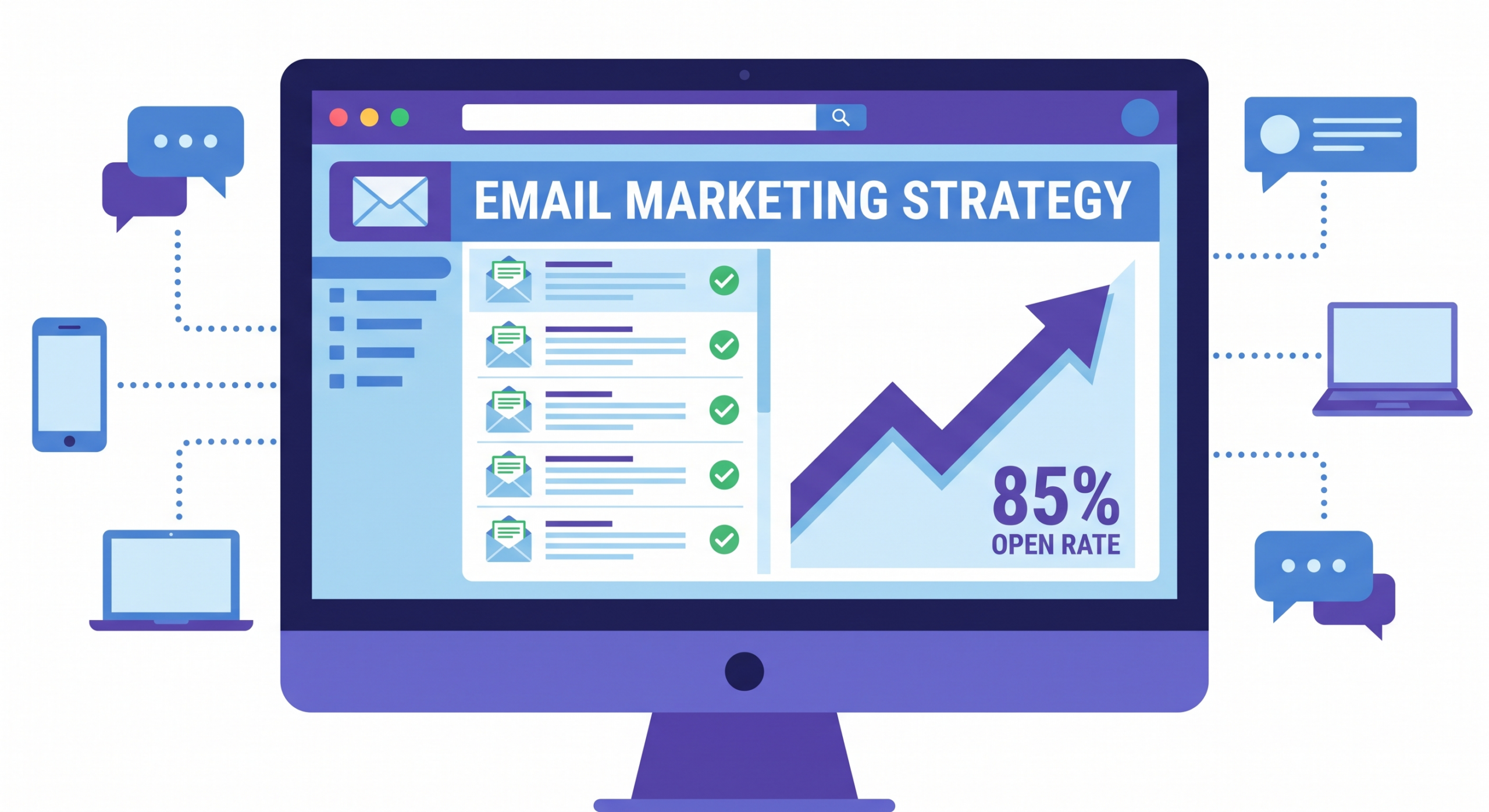
Email marketing consistently delivers the highest ROI of any digital marketing channel — roughly $42 for every $1 spent according to industry research. But the email marketing landscape has evolved significantly. Between Apple’s Mail Privacy Protection changes, increasing inbox competition, and rising subscriber expectations, effective email marketing in 2025 requires more sophistication than it did five years ago. This guide covers advanced strategies for growing, engaging, and monetizing your email list.
Building a High-Quality Email List
List size is vanity; list engagement is sanity. A highly engaged list of 5,000 subscribers consistently outperforms a disengaged list of 50,000. Building quality starts at the opt-in stage.
Lead Magnets That Actually Work
The most effective lead magnets in 2025 are specific, immediately actionable, and highly relevant to a narrow audience. A “Complete Guide to Marketing” downloads less than “The Exact 7-Email Welcome Sequence That Generated $50K in Our First Month.” Specificity signals genuine value and attracts subscribers who are genuinely interested in your offer — the subscribers most likely to become customers.
Opt-In Form Optimization
Exit-intent popups remain the highest-converting opt-in format despite user resistance — typically converting at 3-10% of visitors. The key is pairing an exit-intent popup with a specific, compelling offer rather than a generic “subscribe to our newsletter.” Embedded forms within high-traffic content pages consistently outperform sidebar widgets. Two-step opt-ins (click a button, then see the form) outperform direct forms by 30-50% in most tests.
Email Deliverability: The Foundation of Performance
An email that doesn’t reach the inbox is worthless. Deliverability is the prerequisite for all other email marketing performance, yet many email marketers treat it as an afterthought.
Authentication Fundamentals
SPF, DKIM, and DMARC authentication records are now non-negotiable requirements for inbox delivery. Google and Yahoo made DMARC compliance mandatory for bulk senders in 2024. If you haven’t configured these DNS records, your emails are likely going to spam for a significant percentage of recipients. Check your authentication status using tools like MXToolbox or mail-tester.com.
List Hygiene
Sending to inactive subscribers damages your sender reputation and reduces deliverability for your active subscribers. Implement a systematic re-engagement workflow: at 90 days of inactivity, send a re-engagement sequence; at 180 days with no response, suppress the subscriber. Clean your list quarterly. The short-term pain of a smaller list is more than offset by better deliverability for engaged subscribers.
Segmentation and Personalization
Batch-and-blast email is dead. The most effective email programs in 2025 use behavioral segmentation to send relevant messages to the right subscribers at the right time.
Behavioral Triggers
Behavioral trigger emails — sent automatically in response to specific subscriber actions — consistently outperform scheduled broadcast emails. Key triggers: welcome sequence (immediately on subscribe), purchase confirmation and follow-up, browse abandonment, cart abandonment, post-purchase review request, anniversary/milestone emails, and re-engagement workflows. These emails feel timely and relevant because they are.
Predictive Segmentation
Modern email platforms (Klaviyo, ActiveCampaign, HubSpot) now use machine learning to predict subscriber behavior — purchase likelihood, churn risk, optimal send time. Using these predictive features to prioritize high-value segments and personalize offers delivers measurable lift in revenue per email.
Email Marketing Metrics Comparison
| Metric | Industry Average | Good Performance | Excellent Performance |
|---|---|---|---|
| Open Rate | 20-25% | 30-35% | 40%+ |
| Click Rate | 2-3% | 4-6% | 8%+ |
| Conversion Rate | 1-2% | 3-5% | 7%+ |
| Unsubscribe Rate | 0.2-0.5% | <0.2% | <0.1% |
| Bounce Rate | <2% | <1% | <0.5% |
| Revenue per Email | Varies by industry | $0.10-0.30 | $0.50+ |
Email Copywriting for Conversion
The most technically sophisticated email program still fails if the copy doesn’t connect. Email copywriting principles that drive clicks and conversions.
Subject Line Formulas That Work
The highest-converting subject lines tend to be short (30-50 characters), specific, curiosity-provoking, or directly tied to a clear benefit. Test: question vs statement, personalization vs generic, specific number vs vague claim. Never clickbait — misleading subject lines damage trust and increase unsubscribes. The best subject line is one that accurately promises something valuable.
The One Email, One Goal Principle
Each email should have a single, clear goal and a single primary call-to-action. Emails with multiple competing CTAs generate lower click rates than emails with one focused ask. If you have multiple things to communicate, send multiple emails rather than one cluttered email with competing priorities.
Frequently Asked Questions
How often should I email my list?
There’s no universal answer, but consistency matters more than frequency. A weekly email consistently delivered outperforms sporadic daily emails. The right frequency depends on your content quality and your audience’s expectations — set expectations at opt-in and honor them. Most business email lists perform best at 1-3 emails per week.
Does email marketing still work with young audiences?
Yes. Despite the perception that younger audiences prefer social media, email usage is consistent across age groups for receiving brand communications. The preference shift is in personal communication (younger people prefer messaging apps), not professional or commercial communication. Build an email list of any demographic; don’t let social media “preference” stop you.
What email marketing platform should I use?
For e-commerce: Klaviyo is the gold standard. For B2B lead nurturing: HubSpot or ActiveCampaign. For creators and newsletters: Kit (formerly ConvertKit) or Beehiiv. For budget-constrained businesses with basic needs: Mailchimp or Brevo (formerly Sendinblue). The platform matters less than the strategy; don’t change platforms hoping it will fix engagement problems that require better content and segmentation.
Conclusion
Email marketing in 2025 is more effective than ever for businesses that invest in list quality, deliverability fundamentals, behavioral segmentation, and compelling copy. The channels that appear shinier (social media, paid advertising) deliver less consistent ROI because they depend on platforms you don’t own. Email is the one channel where you own the relationship directly. Build it, maintain it, and treat your subscribers with the respect their attention deserves — and it will remain your highest-ROI marketing channel for years to come.